A media portal revamp organized around discovery, content clarity, and connected delivery
Visit Live Project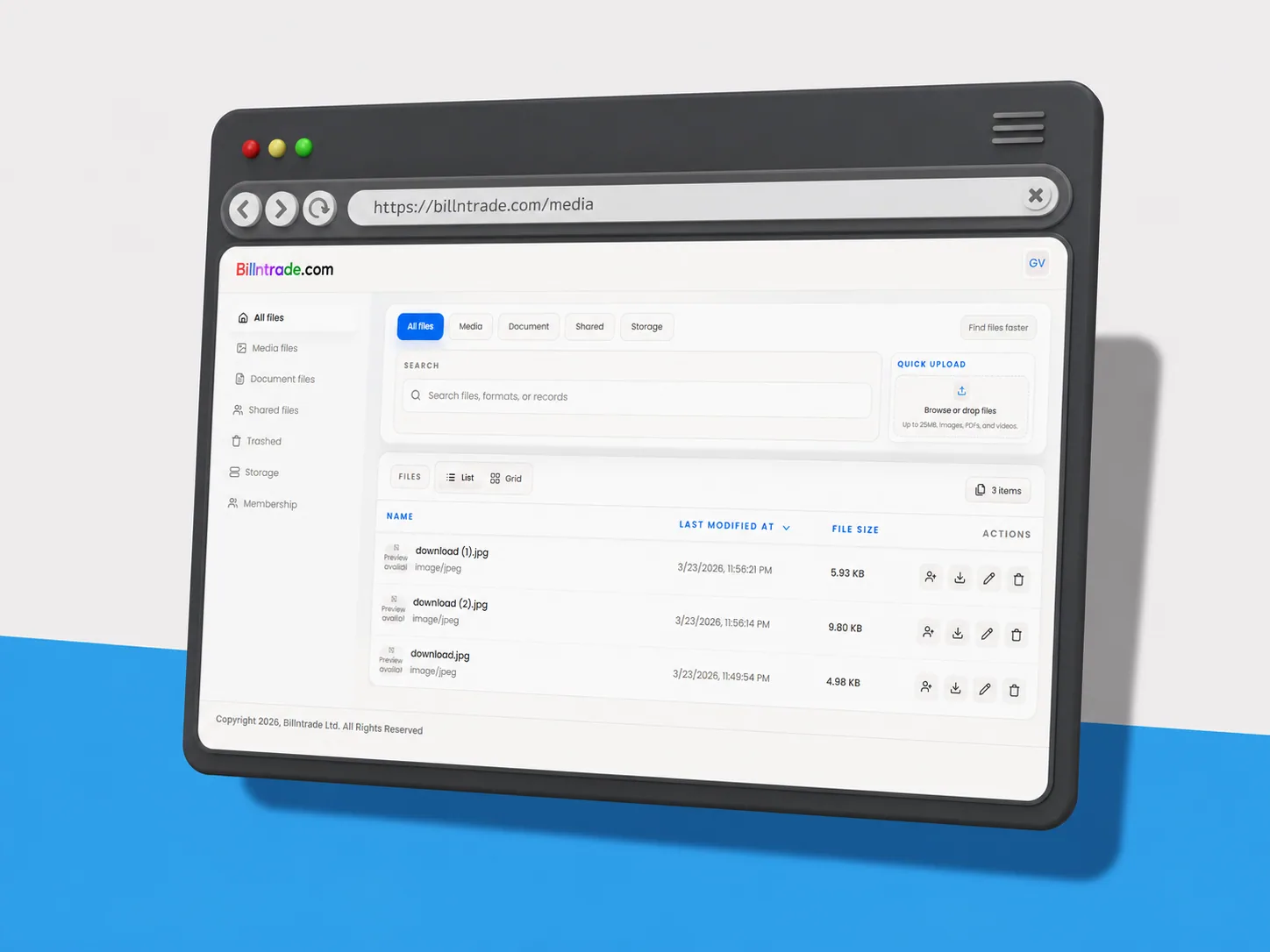
Project brief
From business need to delivered system
| Area | Project detail |
|---|---|
| Business need | A clearer media-facing product experience with easier discovery and stronger presentation. |
| Product response | A structured frontend with reusable content areas and API-aware browsing states. |
| Delivery result | A calmer, more organized portal that could support published content and future expansion. |
Business need
A clearer media-facing product experience with easier discovery and stronger presentation.
Product response
A structured frontend with reusable content areas and API-aware browsing states.
Delivery result
A calmer, more organized portal that could support published content and future expansion.
Stack used
The challenge
What Billntrade Media needed the build to solve
Media-heavy products can become difficult to scan when categories, content, and supporting information compete for attention. The challenge was to make discovery feel simple while keeping the interface flexible enough for live content, changing records, and future product modules.
Project facts
| Project type | Revamp |
|---|---|
| Responsibility | UI/UX, frontend, backend, database, and ecommerce workflows |
| Coverage | Public storefront and private owner dashboard |
| Technology | Next.js, React, JavaScript, Tailwind CSS |
The approach
How I handled the Billntrade Media delivery
The first step was to organize the experience around how someone discovers, scans, opens, and returns to media content rather than presenting every capability with the same visual weight.
I refined the UI/UX system around content hierarchy, readable spacing, responsive cards, clear entry points, and stronger relationships between media and supporting product information.
API-connected sections were implemented with practical states so the interface remained understandable while content was loading, unavailable, empty, or being refreshed.
The resulting structure kept the visual language consistent while leaving room for more media types, categories, and product capabilities later.
System structure
The structure behind Billntrade Media
The delivery connected the user-facing experience with the underlying implementation, keeping the project clear to use and practical to maintain as its needs expanded.
Content discovery
Categories, media cards, supporting context, and clear next actions.
Frontend experience
Responsive layouts, reusable components, and readable content states.
Connected content
API-aware presentation for changing media and product records.
What was delivered
The practical output of the build
| Area | Project detail |
|---|---|
| Discovery flow | Clearer entry points, content grouping, browsing rhythm, and media presentation. |
| UI/UX system | Responsive hierarchy, reusable cards, readable layouts, and consistent interaction treatment. |
| API integration | Connected content areas with useful loading, empty, and error states. |
| Portal polish | A cleaner, more professional media experience ready for ongoing content updates. |
Discovery flow
Clearer entry points, content grouping, browsing rhythm, and media presentation.
UI/UX system
Responsive hierarchy, reusable cards, readable layouts, and consistent interaction treatment.
API integration
Connected content areas with useful loading, empty, and error states.
Portal polish
A cleaner, more professional media experience ready for ongoing content updates.
Delivery coverage
The shape of the work
Discovery
Structured
UI/UX
Revamped
API
Connected
Content
Scalable
Technical implementation
What had to work behind the interface
The frontend separated discovery, content presentation, and supporting product information so the portal could feel useful without becoming visually dense.
API integration work focused on keeping live content states understandable and ensuring that the interface still had a clear structure when records were loading or unavailable.
The revamp used reusable patterns for media cards, content blocks, and responsive spacing so additional content could be added without breaking the overall rhythm.
Tools used
| Next.js | Media-facing route structure and responsive product delivery. |
|---|---|
| React | Reusable content, media, and API-aware interface components. |
| JavaScript | Interactive presentation, data handling, and browser-side behavior. |
| Tailwind CSS | Consistent responsive layout and visual system refinement. |
Outcomes
What the Billntrade Media delivery achieved
The portal became easier to scan, browse, and understand as a media-led product experience.
The UI/UX system gave content and product information clearer separation without making the interface feel disconnected.
The API-aware frontend created a more dependable base for ongoing media and content updates.
Why this matters
Clearer media discovery.
More structured content presentation.
API-aware interface states.
Scalable frontend patterns.
Reference note
This case study focuses on the public media experience, its frontend revamp, UI/UX work, and API-connected presentation. Private content providers and internal systems are intentionally omitted.
Continue exploring
More ways to explore Billntrade Media.
Compare related case studies, understand the services behind this delivery, or start a conversation about your own build.
Next Step