A courier website built around fast service understanding and direct customer action
Visit Live Project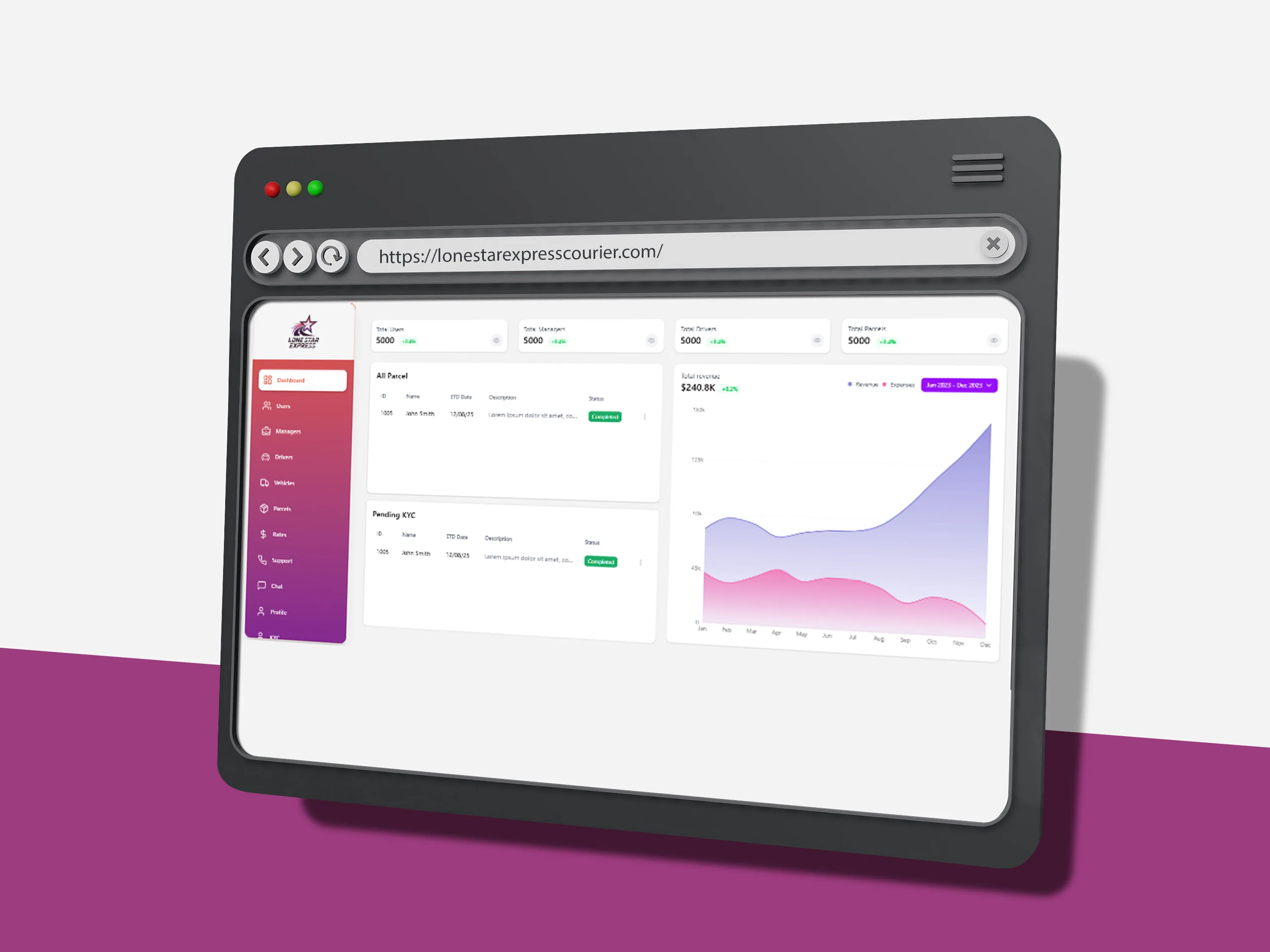
Project brief
From business need to delivered system
| Area | Project detail |
|---|---|
| Business need | A clear courier website that could build trust and support fast enquiries. |
| Product response | A focused frontend organized around services, coverage, and direct action. |
| Delivery result | A more accessible service presentation for customers browsing on different devices. |
Business need
A clear courier website that could build trust and support fast enquiries.
Product response
A focused frontend organized around services, coverage, and direct action.
Delivery result
A more accessible service presentation for customers browsing on different devices.
Stack used
The challenge
What Lone Star Express needed the build to solve
Courier visitors usually want answers quickly: what is offered, where it operates, and how to get in touch. The challenge was to present enough detail to build confidence without burying the main service and contact paths in unnecessary content.
Project facts
| Project type | Full Build |
|---|---|
| Responsibility | UI/UX, frontend, backend, database, and ecommerce workflows |
| Coverage | Public storefront and private owner dashboard |
| Technology | Next.js, React, JavaScript, Node.js, MongoDB |
The approach
How I handled the Lone Star Express delivery
I shaped the page hierarchy around the questions a courier customer is likely to ask first: what the company handles, where it operates, and how to request help.
Service content was grouped into readable sections with clear headings, supporting detail, and action points that remained easy to find as the visitor moved through the page.
The responsive frontend was refined around smaller screens so important service and contact information did not lose clarity on mobile devices.
Visual choices were kept practical and trust-led, giving the business a professional presence without making the service feel complicated.
System structure
The structure behind Lone Star Express
The delivery connected the user-facing experience with the underlying implementation, keeping the project clear to use and practical to maintain as its needs expanded.
Service message
A quick explanation of what the courier business offers and supports.
Frontend experience
Responsive sections, route visibility, and readable service information.
Customer action
Clear contact routes that reduce friction for new enquiries.
What was delivered
The practical output of the build
| Area | Project detail |
|---|---|
| Service structure | Clear courier services, route visibility, coverage information, and supporting business content. |
| Frontend build | Responsive page implementation with reusable sections and consistent interaction treatment. |
| Contact flow | Direct, visible action points for customers ready to ask a question or request service. |
| Trust presentation | A more organized and professional interface for a service-led business. |
Service structure
Clear courier services, route visibility, coverage information, and supporting business content.
Frontend build
Responsive page implementation with reusable sections and consistent interaction treatment.
Contact flow
Direct, visible action points for customers ready to ask a question or request service.
Trust presentation
A more organized and professional interface for a service-led business.
Delivery coverage
The shape of the work
Services
Structured
Frontend
Complete
Responsive
Polished
Contact
Clear
Technical implementation
What had to work behind the interface
The frontend was kept modular so service sections, coverage information, and contact content could be updated without disturbing the full page structure.
Responsive behavior was treated as part of the service experience, ensuring that the most important information remained easy to scan on mobile and desktop.
The implementation focused on clarity and reliability rather than unnecessary interaction, which suited a courier website built around fast customer decisions.
Tools used
| Next.js | Responsive service-site structure and page delivery. |
|---|---|
| React | Reusable service, content, and contact interface sections. |
| Node.js | Available within the broader project stack for connected application needs where required. |
| MongoDB | Available data foundation within the broader project stack where required. |
Outcomes
What the Lone Star Express delivery achieved
Lone Star Express received a clearer service website that helped visitors understand the offer faster.
The responsive frontend kept service and contact information accessible across different screen sizes.
The structure created a more professional foundation for future service and coverage updates.
Why this matters
Faster service understanding.
Responsive frontend delivery.
Clearer customer action.
Trust-led presentation.
Reference note
This case study focuses on the frontend and service-presentation work delivered for Lone Star Express. Private business operations and performance figures are intentionally omitted.
Continue exploring
More ways to explore Lone Star Express.
Compare related case studies, understand the services behind this delivery, or start a conversation about your own build.
Next Step