A full-stack workflow product organized around operational clarity and connected business flows
Visit Live Project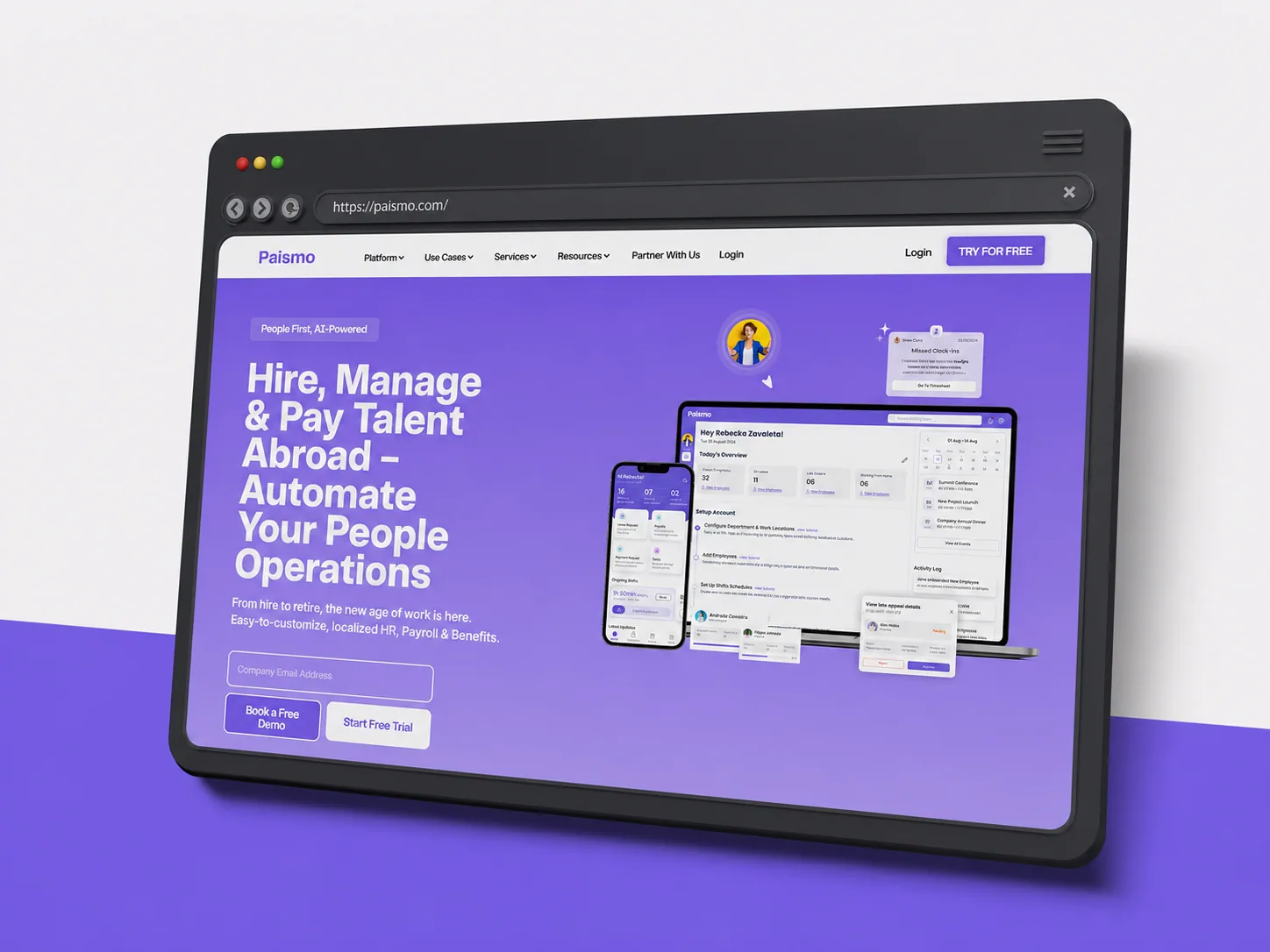
Project brief
From business need to delivered system
| Area | Project detail |
|---|---|
| Business need | A clearer workflow product that could connect operational value with usable product behavior. |
| Product response | A full-stack interface and data structure shaped around roles, processes, and business actions. |
| Delivery result | A more understandable platform foundation for connected workflow and product expansion. |
Business need
A clearer workflow product that could connect operational value with usable product behavior.
Product response
A full-stack interface and data structure shaped around roles, processes, and business actions.
Delivery result
A more understandable platform foundation for connected workflow and product expansion.
Stack used
The challenge
What Paismo needed the build to solve
Workflow products become difficult to present when their value is spread across multiple roles, records, and operational tasks. The challenge was to connect the product story with the underlying behavior so the interface could explain not just what the platform offers, but how it fits into daily work.
Project facts
| Project type | Platform UX |
|---|---|
| Responsibility | UI/UX, frontend, backend, database, and ecommerce workflows |
| Coverage | Public storefront and private owner dashboard |
| Technology | Next.js, React, Python, TypeScript, PostgreSQL |
The approach
How I handled the Paismo delivery
I began with the operational story: what problem the platform helps solve, which roles interact with it, and what each user needs to do next.
The frontend translated that story into clearer workflow sections, product hierarchy, responsive screens, and action paths that did not rely on a long feature list alone.
Backend logic and database-connected flows were aligned with the interface so records, status, and business actions could be represented consistently across the product.
The full-stack structure was kept extensible for additional roles, workflows, integrations, and product updates as the platform grew.
System structure
The structure behind Paismo
The delivery connected the user-facing experience with the underlying implementation, keeping the project clear to use and practical to maintain as its needs expanded.
Business workflow
Roles, processes, and operational value explained in a usable sequence.
Product frontend
Responsive workflow screens, feature presentation, and action states.
Backend + database
Connected logic and structured records supporting daily product behavior.
What was delivered
The practical output of the build
| Area | Project detail |
|---|---|
| Workflow UX | Clearer product narrative, role-oriented paths, and business-focused action hierarchy. |
| Frontend application | Responsive product interface with reusable workflow, feature, and content sections. |
| Backend + data | Connected application logic and structured records supporting operational behavior. |
| Product foundation | A scalable base for more roles, processes, integrations, and platform updates. |
Workflow UX
Clearer product narrative, role-oriented paths, and business-focused action hierarchy.
Frontend application
Responsive product interface with reusable workflow, feature, and content sections.
Backend + data
Connected application logic and structured records supporting operational behavior.
Product foundation
A scalable base for more roles, processes, integrations, and platform updates.
Delivery coverage
The shape of the work
Workflow
Structured
Frontend
Complete
Backend
Connected
Data
Organized
Technical implementation
What had to work behind the interface
The product was shaped around workflow boundaries so the interface could explain operational value before presenting secondary feature detail.
Frontend and backend behavior were planned together, keeping product states, records, and user actions aligned across the application.
The database-connected structure left room for additional business roles and processes without requiring the product narrative to be rebuilt from scratch.
Tools used
| Next.js | Full-stack product structure, routing, and responsive delivery. |
|---|---|
| React | Reusable workflow, product, and role-oriented interface components. |
| Python | Backend and automation capability within the broader product stack. |
| PostgreSQL | Structured relational data foundation for workflow records. |
Outcomes
What the Paismo delivery achieved
Paismo received a clearer way to explain and support connected business workflows.
The frontend and backend were aligned around the same product states, roles, and operational actions.
The full-stack foundation created a practical base for future integrations, roles, and process expansion.
Why this matters
Clearer workflow product.
Connected frontend and backend.
Structured operational data.
Ready for platform growth.
Reference note
This case study focuses on the full-stack product, workflow UX, backend, and database-connected work delivered for Paismo. Private operational and vendor details are intentionally omitted.
Continue exploring
More ways to explore Paismo.
Compare related case studies, understand the services behind this delivery, or start a conversation about your own build.
Next Step